|
|
|
|
|
|
|
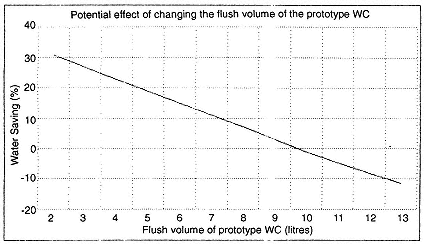
Figure 13.10
Potential effect of changing the flush volume of the prototype WC |
|
|
|
|
|
|
|
|
WC water use with any flush volume may be added to the non WC volume used. Figure 13.10 demonstrates this graphically, although caution must be exercised in order to avoid reducing the flush volume to the point at which double WC flushing becomes necessary. A study of the number of WC operations inherent in the control and prototype groups via flush volume setting and WC total usage illustrates that the prototype WC was normally only flushed once per usage, indicating the efficiency of the design. From a detailed questionnaire designed primarily to assess user reaction to the LVFT, it was apparent that the two groups were virtually identical in terms of population structure, age, employment, income and education, justifying the selection of the two samples for comparison. The overall reaction to the prototype WCs was positive. |
|
|
|
|
|
|
|
|
Water conservation via the use of LVFT is an achievable objective utilizing known design methodologies and materials. User reaction, particularly where the introduction of LVFT is linked to cash savings in reduced water costs, was shown to be favourable. |
|
|
|
|
|