|
|
|
|
|
|
|
(Figure 13.7) were machined from PVC. The overseas site trials, which commenced in August 1985, involved ceramic cisterns and were concentrated in the capitals of Botswana and Lesotho. The Botswana programme of prototype WC installations was completed by May 1986. The main concentration of installations was in Gaborone where some 95 of the units were installed. |
|
|
|
|
|
|
|
|
There were several aspects of the monitoring. Monthly inspections of all the project installations were undertaken in Gaborone to identify any problems with the WCs. These inspections solved a problem with the cistern design caused by a lack of quality control in manufacture. |
|
|
|
|
|
|
|
|
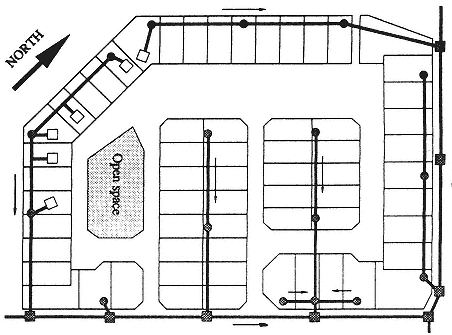
Three drainage surveys were carried out on an estate of 63 houses fitted with the experimental WCs in Gaborone West (Figure 13.8). The surveys showed that a WC flush volume of 4 litres had no adverse effect on any of the main sewer lines or the house-to-main-sewer connections, which were to British Standards. |
|
|
|
|
|
|
|
|
Water consumption was monitored on this estate. Water readings were taken at 14-day intervals from December 1986 to |
|
|
|
|
|
|
|
|
Figure 13.8
Layout of 63 low income Botswana Housing Corporation house plots,
Gaborone West, fitted with 4 litre flush WCs |
|
|
|
|
|