|
|
|
|
|
|
|
M130. When the upstream channel is clean, its capacity is maximized and upstream flooding is minimized; this means that the peak flow arrives at M130 with a minimum of attenuation, and thus overflows. When solids partially block the upstream channel, upstream flooding occurs, with a resultant shaving of the peak flow at this node. |
|
|
|
|
|
|
|
|
In smaller events, channel hydraulics is more important in determining the depth of flooding, but flood depths are also correspondingly lower. The maximum flood depth predicted by SPIDA in all analyses was 0.24 m. It should be noted, however, that 'small increases in depth' can have a disproportionate impact on residents if they overtop the thresholds of their homes! |
|
|
|
|
|
|
|
|
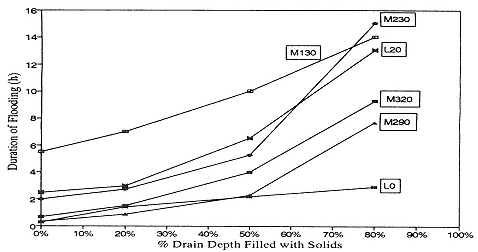
Figure 14.5 shows the sensitivity of flood duration to solids level at these same six nodes. The effect of solids deposition on duration is substantial. In the extreme case, only 2 hours of flooding are predicted at node M230 when the channel is clean, while 15 are predicted when the channel is 80 per cent blocked. Other nodes show less extreme, but still meaningful, variations in |
|
|
|
|
|
|
|
|
Figure 14.5
Flood duration as a function of solids blockage (event of 5 September 1994) |
|
|
|
|
|